WORK MADE IN THE BACKYARD
Ongoing body of work, 2025–present
The Clothesline
2026
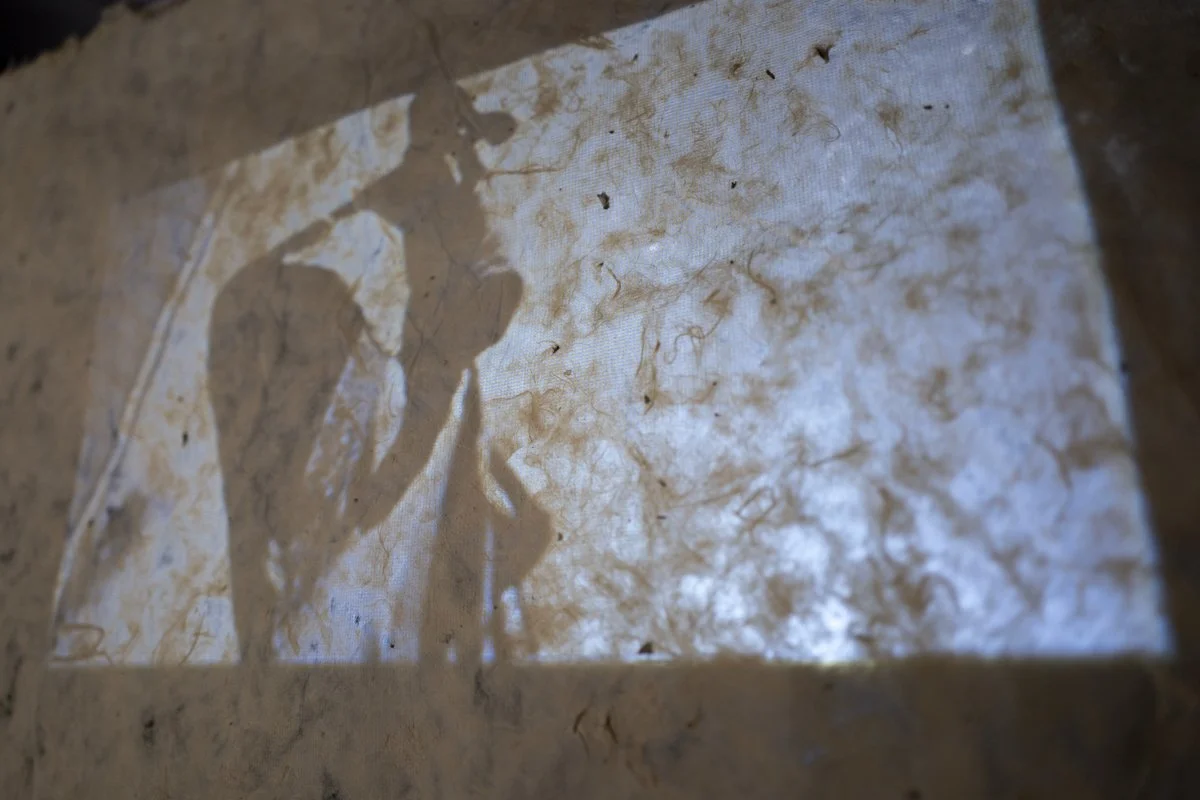
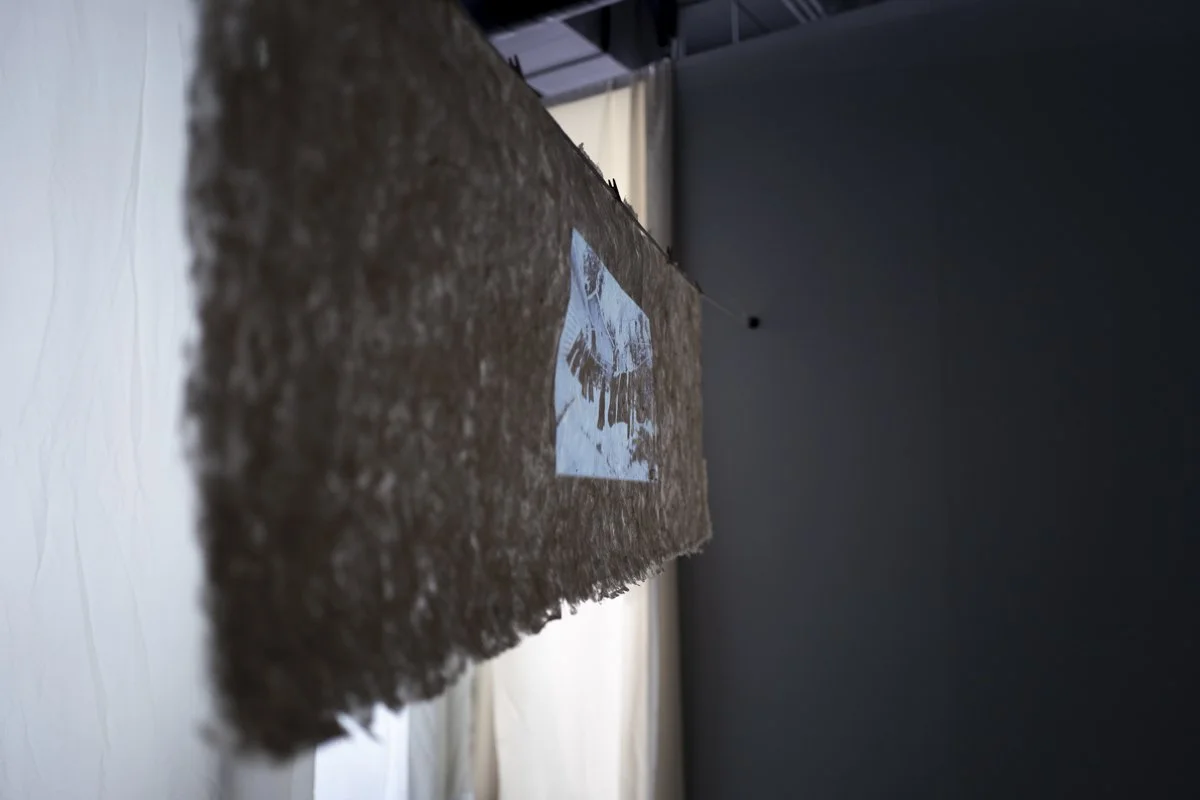
Single channel video, sound, handmade gampi paper, projection
The Clothesline began in my backyard with the simple act of hanging clothing on a clothesline. Photographed and filmed in black and white, the garments move in wind and changing light, alternately suggesting bodies and emphasizing their absence. The clothes retain the shapes and gestures of the people who might inhabit them, yet those bodies are nowhere to be seen.
The work grew from my experience of the backyard as a place of refuge and sustained attention. An ordinary domestic act became a way of considering presence and absence, embodiment, home, and the traces we leave in the places we inhabit. The movement of the clothing, accompanied by the sound of humming, gives the absent body a kind of felt presence without ever making it visible.
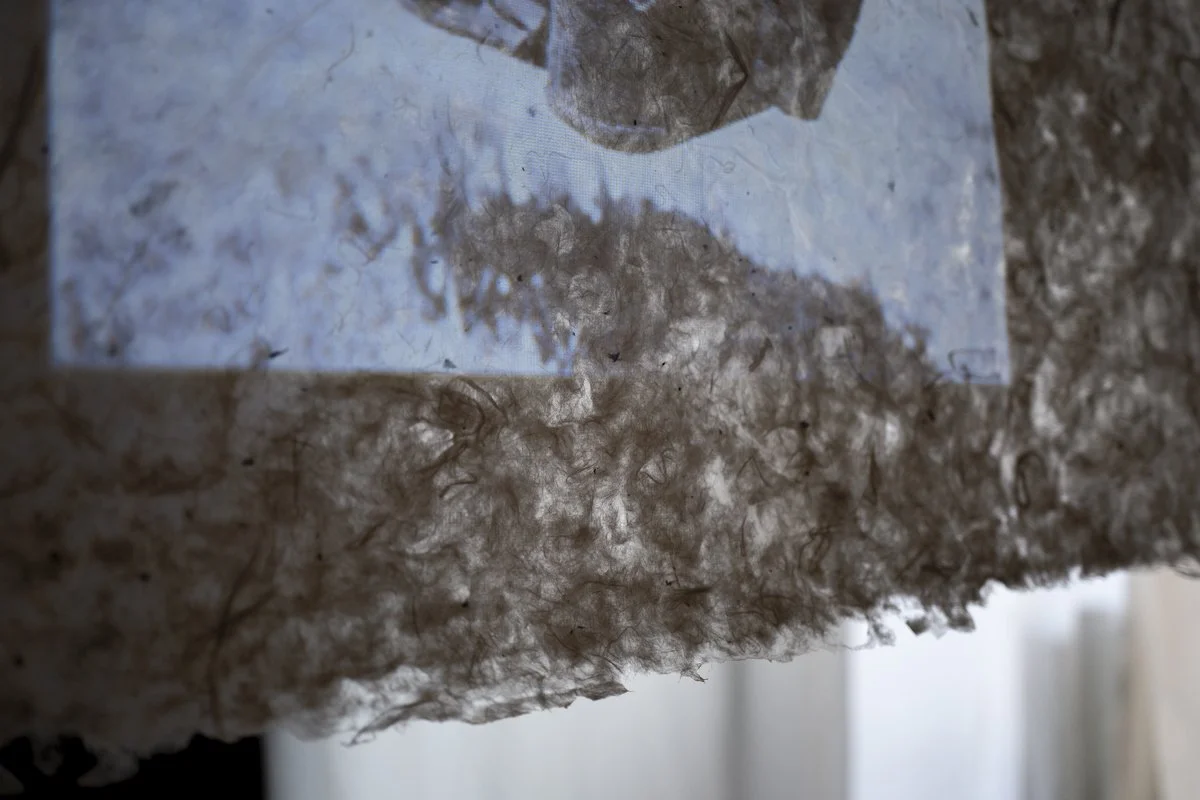
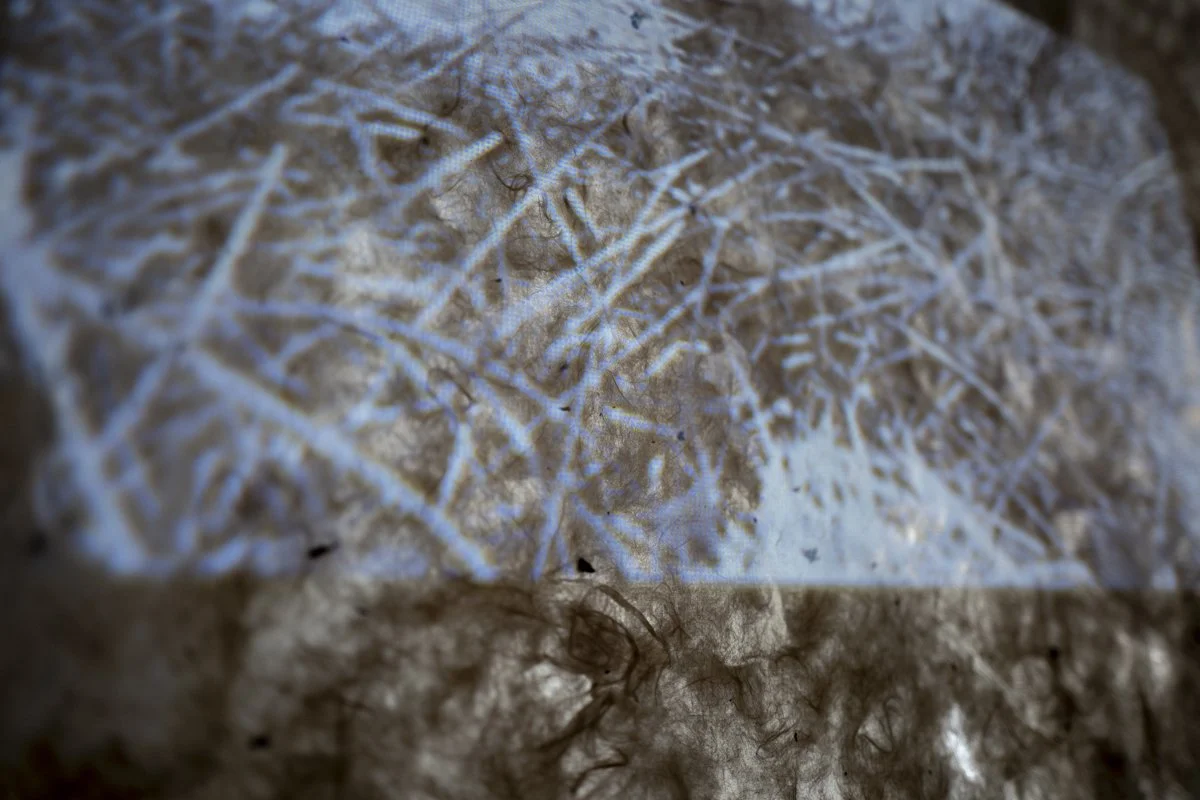
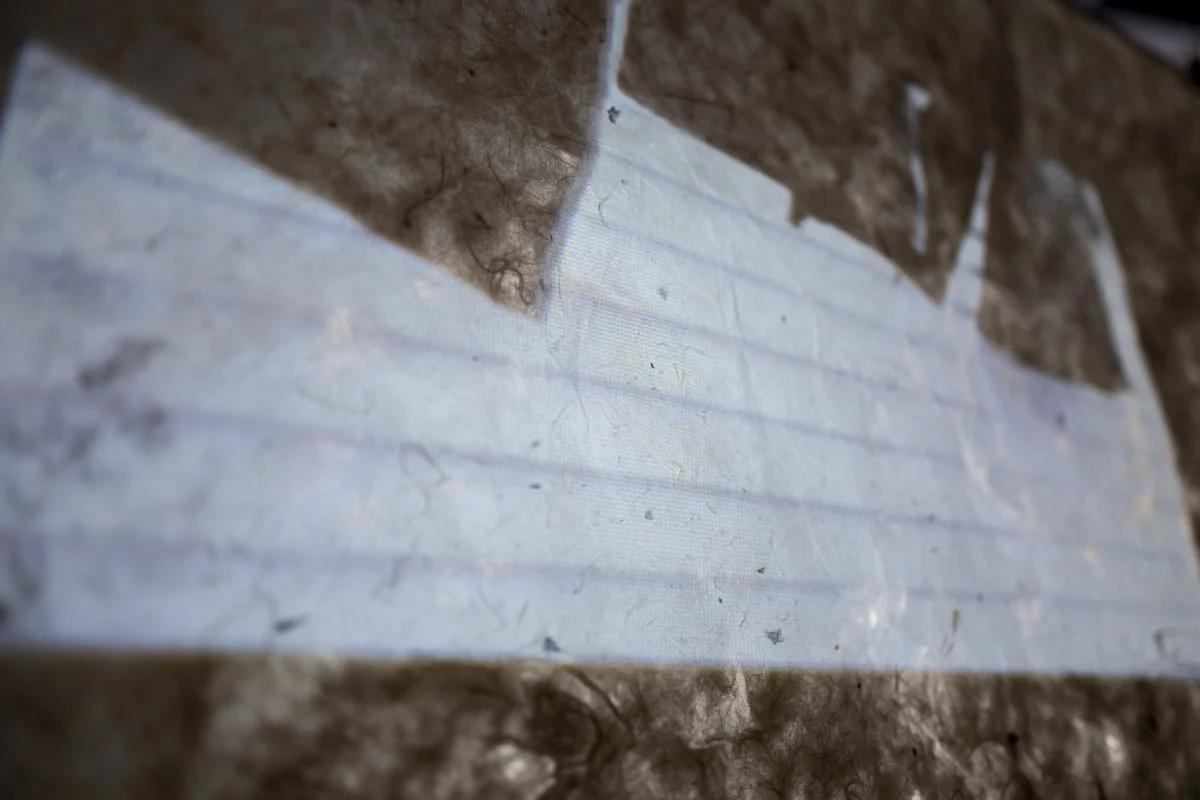
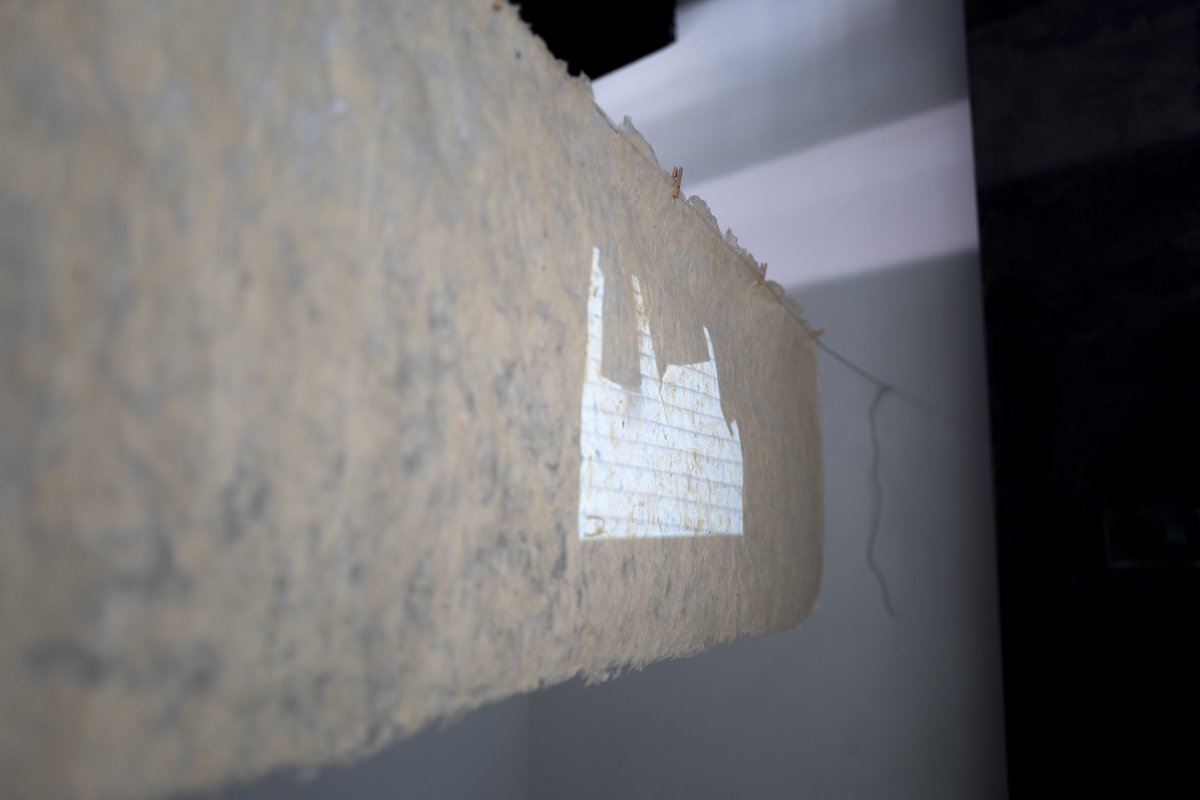
For its installation, the moving image is rear-projected through a suspended sheet of handmade Philippine gampi paper. The translucent fibers interrupt and soften the projection, allowing the image to appear and disappear within the material itself. Light, image, paper, sound, and movement become inseparable: the physical object receives the image while also refusing to hold it still.
The work occupies the space between material presence and disappearance, asking how something can remain perceptible even when the body itself is absent.
Work Made in the Backyard
Ongoing
The backyard became a place of refuge before I understood it as a place of inquiry. Through spending time there, looking, resting, gardening, making photographs, and simply being present, my relationship to this small piece of land gradually changed. Almost without realizing it, I began to use it as a studio, a laboratory, and a playground for curiosity.
Working with what is immediately at hand, including clothing, grass, soil, sunlight, plants, water, and handmade materials, I have come to understand the backyard as both an ordinary domestic space and a territory connected to much larger histories and systems. The intimate meets questions of land, labor, ecology, the body, memory, and our relationship to the living world.
The work is grounded in close attention to physical experience while also opening onto spiritual questions that have long informed my practice: What does it mean to inhabit a body, a place, a particular moment in time? Where does the individual end and the larger living world begin? What might sustained attention reveal about our interconnection with one another and with the world we temporarily inhabit?
The works made here move between the ordinary and the metaphysical. A clothesline, a bedsheet, grass, shadow, wind, or a patch of cultivated earth can become a way of thinking about presence and absence, embodiment and history, refuge and vulnerability. The backyard is not simply a backdrop for these works. The relationship I developed with this place made the work possible.
Colonial Specimen × Million
This work began in the backyard of my rented house in South Bend, Indiana, where, during a period of illness and recovery from carpal tunnel surgery, I allowed the grass to grow nearly three feet tall.
When the grass was high, I lay down in it and made a body-shaped impression. For a brief time, the lawn became something closer to a field. It held memory, contact, wildness, and return. The imprint of my figure remained in the grass longer than I expected.
Eventually, the grass had to be cut.
The cutting was so much work that it became part of the work.
The body made the mark. The body was then required to remove the mark. After more than an hour with a weed-whacker and then pushing the mower repeatedly through the tall grass, sweating and exhausted, I lay down again in the same place where the original form had been.
The evidence had been removed.
Yet the evidence remained.
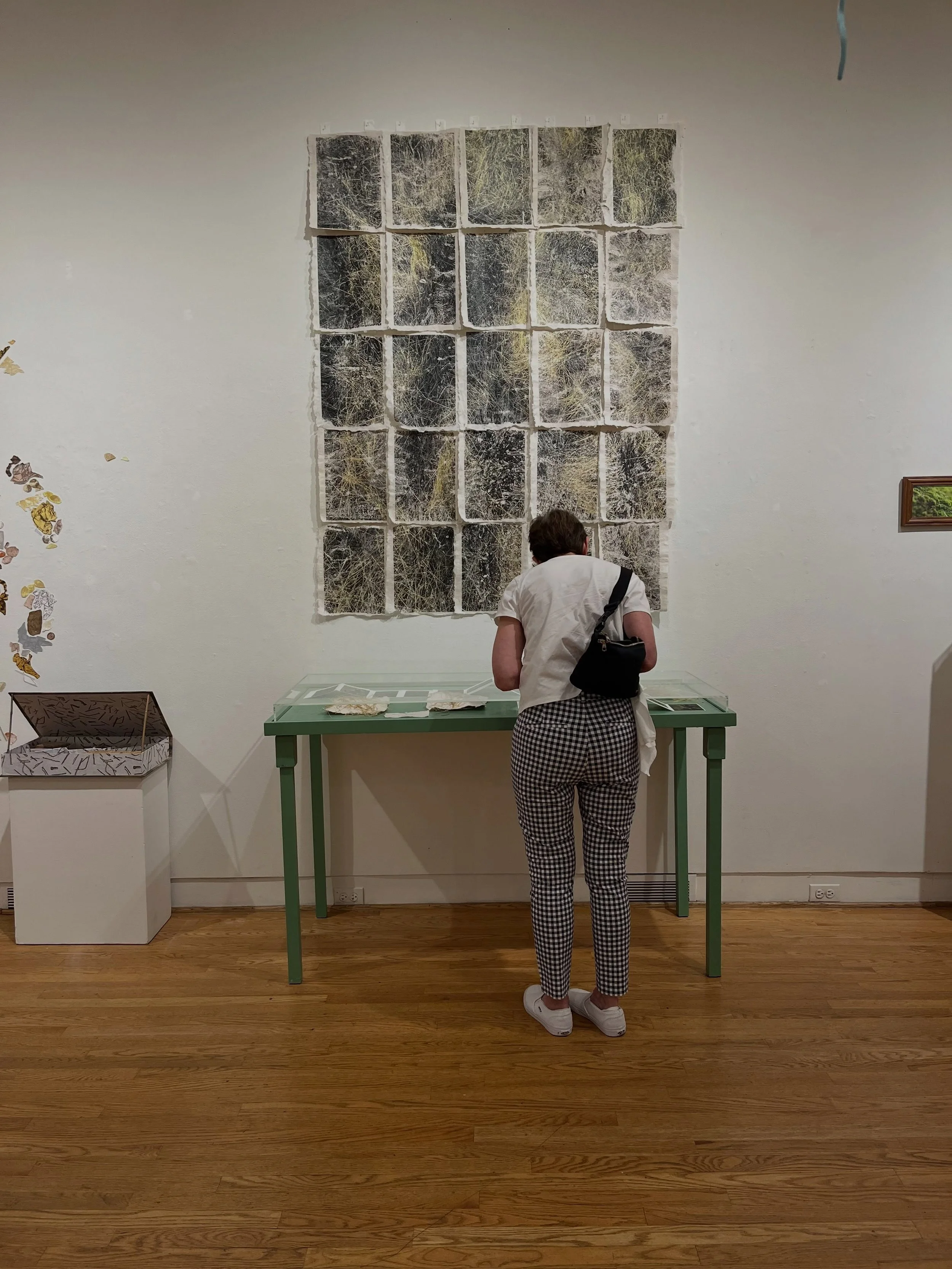
Colonial Specimen × Million holds the stages of that event: the tall grass, the body impression, the cutting, the labor, the residue, and the gradual disappearance of the trace. A large gridded image of the grass figure is printed across separate handmade sheets, each panel slightly unstable, overlapping, and partial. The body becomes something requiring assembly: visible, interrupted, never fully possessed, flickering in and out of clarity with the movement of air and the mind.
Vitrines gather evidence and remnants: handmade paper embedded with cut grass, specimens from the site, photographs, and an accordion book documenting the sequence of growth, contact, mowing, exhaustion, and erasure. These objects move between field notes, archive, relic, and evidence.
I am asking what counts as care, and what counts as control.
A lawn is not empty land. It is a land-use system: a living surface kept short, legible, and obedient through repeated labor, water, fuel, and social enforcement.
A green lawn can be beautiful. That is part of the problem. Beauty is not neutral. What do we call beautiful? Who taught us to see it that way? What does that beauty require? What does it hide?
In South Bend, the water sprayed across lawns to maintain their greenness is drinking water drawn from underground aquifers.
The sprinkler is called maintenance.
The tall grass is called neglect.
The thing called care is extraction.
The thing called disorder may be restraint.
This is not only about a lawn. It is about inherited landscape ideals, property, obedience, water, neighborhood pressure, and the long afterlife of colonial ideas about land:
land as surface
land as possession
land as something to be subdued into order
I submit to you:
Colonial Specimen × Million.