108 Days: The Attentive Field: Light in the Domestic Space
108 Days is a camera-less, durational photographic work made inside the artist's home. It began as a strict daily protocol: each day, a hand-torn 8 × 8 inch square of mulberry paper was salted, sensitized with silver nitrate, placed in a fixed position, and exposed for exactly twenty-four hours. One day yielded one square. Over time, the prints accumulate into a field, 108 days of light registered not as depiction but as atmosphere: directionality, density, drift, rhythm, and quiet change.
As the work evolved, the protocol opened slightly to include occasional companion exposures from other locations within the house, beside a slow-growing jade plant, among other houseplants, in other quiet zones of domestic life. These variations do not abandon the discipline of the score but extend it, allowing the project to register a broader ecology of the home. What emerges is not only a record of one location over time, but a subtler portrait of the house as an inhabited, changing field of relation. Alongside the exposures, the artist maintains a parallel log of conditions, including cloud cover, temperature, wind, and other atmospheric variables, a documentation practice that grounds the work as both devotional and indexed, situating it between studio ritual and empirical record.
Made without a camera, the prints hold light as both subject and agent. They register not only illumination but time, material, and the passage of lived experience. The home is treated not as backdrop but as contemplative site, a place where perception, memory, ritual, and material presence gather slowly. Each surface bears the marks of process and the hand, emerging through a quiet collaboration between chemistry, sunlight, weather, and waiting.
The project extends a long engagement with minimal and perceptual lineages, Agnes Martin, Ad Reinhardt, Mark Rothko, Uta Barth, artists for whom restraint, duration, and sustained looking become forms of rigor, as well as with the durational and performative discipline associated with artists like On Kawara. It is equally informed by a lineage of spiritual abstraction, particularly Hilma af Klint's understanding of abstraction as inquiry rather than style, and of light as both physical phenomenon and metaphor for illumination that is mental, spiritual, and ethical. Across these lineages, the work reflects a long relationship to photography and to the problem of the "true image": how framing, circulation, and context shape meaning within a culture increasingly driven by speed, extraction, and reaction.
The work is organized as a score, a strict daily structure that still allows for variation in paper fiber, weather, season, and the subtle shifts of domestic light. This score borrows from musical thinking, discipline, repetition-with-difference, return, and from a broader ethical framework in which attention functions as a form of reverence and slowness as a counter-temporality within a culture of acceleration. 108 Days does not seek to take an image from the world. Instead, it establishes the conditions in which the world may inscribe itself quietly and slowly, without a privileged viewpoint. The paper receives; the day composes.
Exhibition is part of the work's form. The installation grows while on view, with newly completed squares added into the field over time, so that viewers encounter the piece as an unfolding record of duration, accumulation, and shared attention rather than as a fixed and finished image.
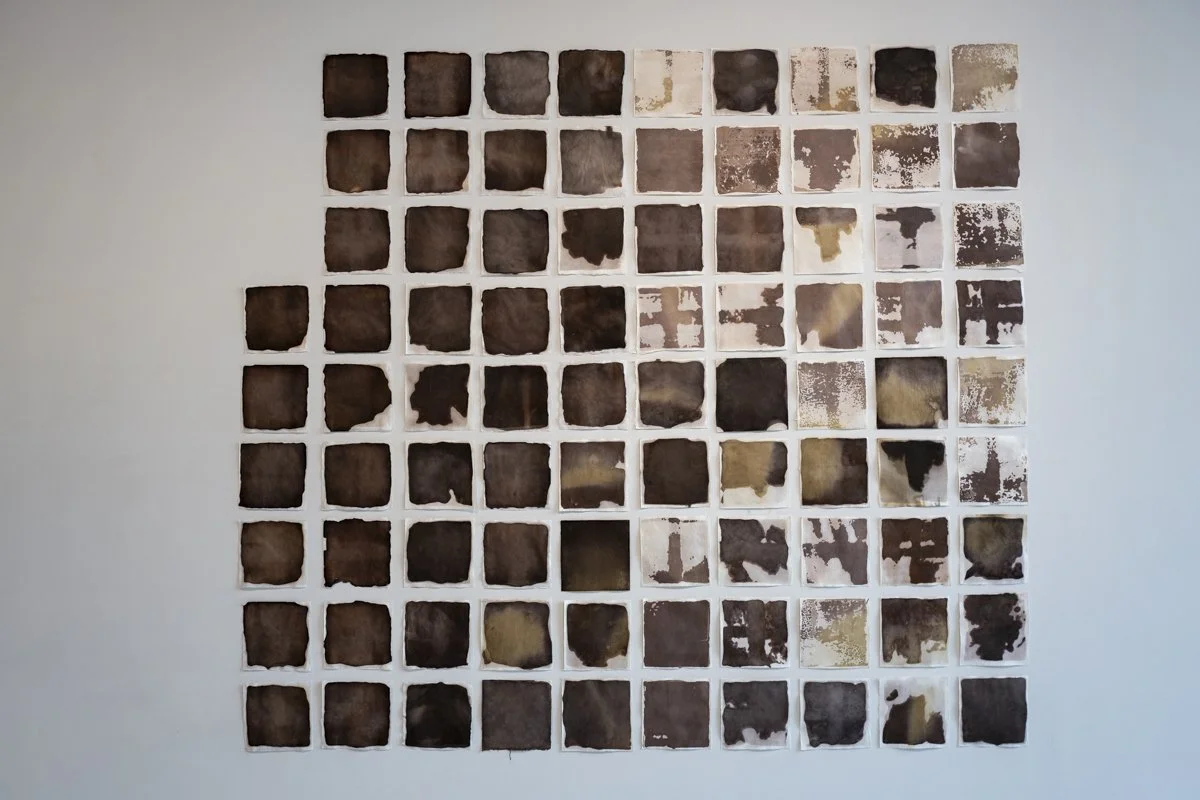
Installation view of 108 Days (2026, Korean Hanji, each square 8x8 inches, total complete installation 10' x 12'
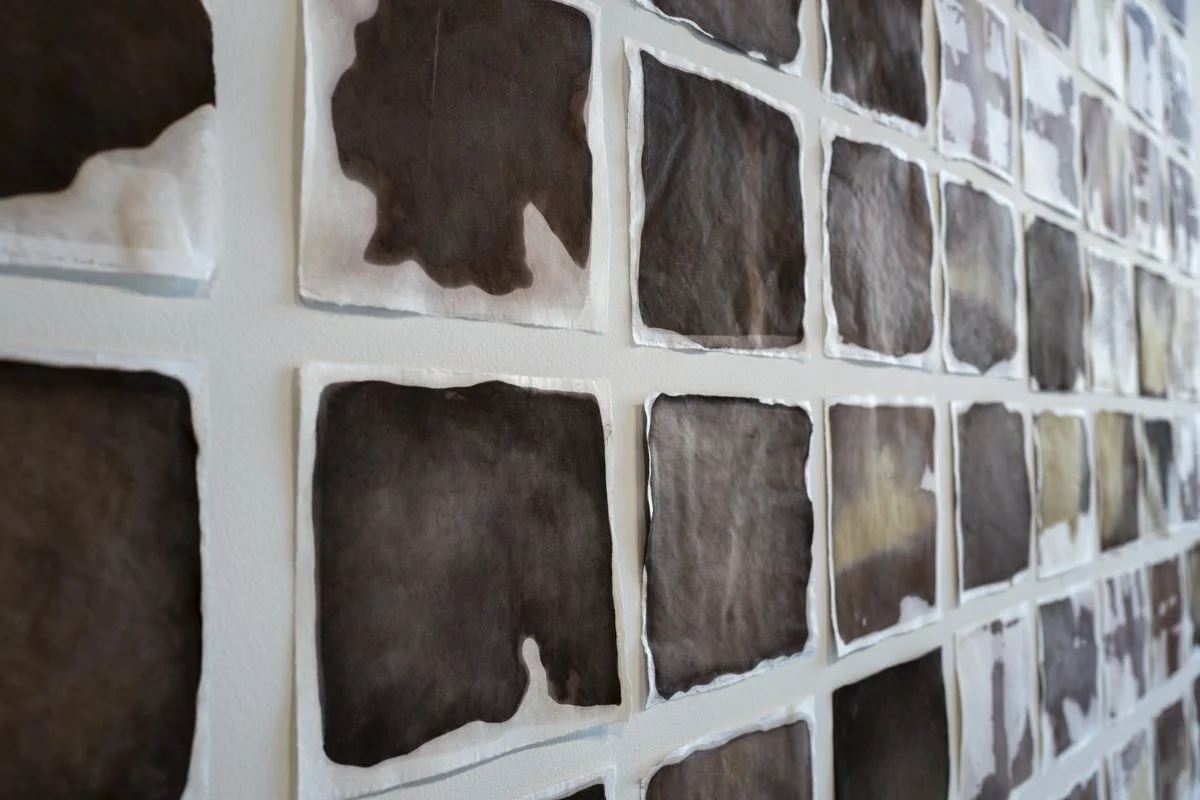
108 Days (detail)
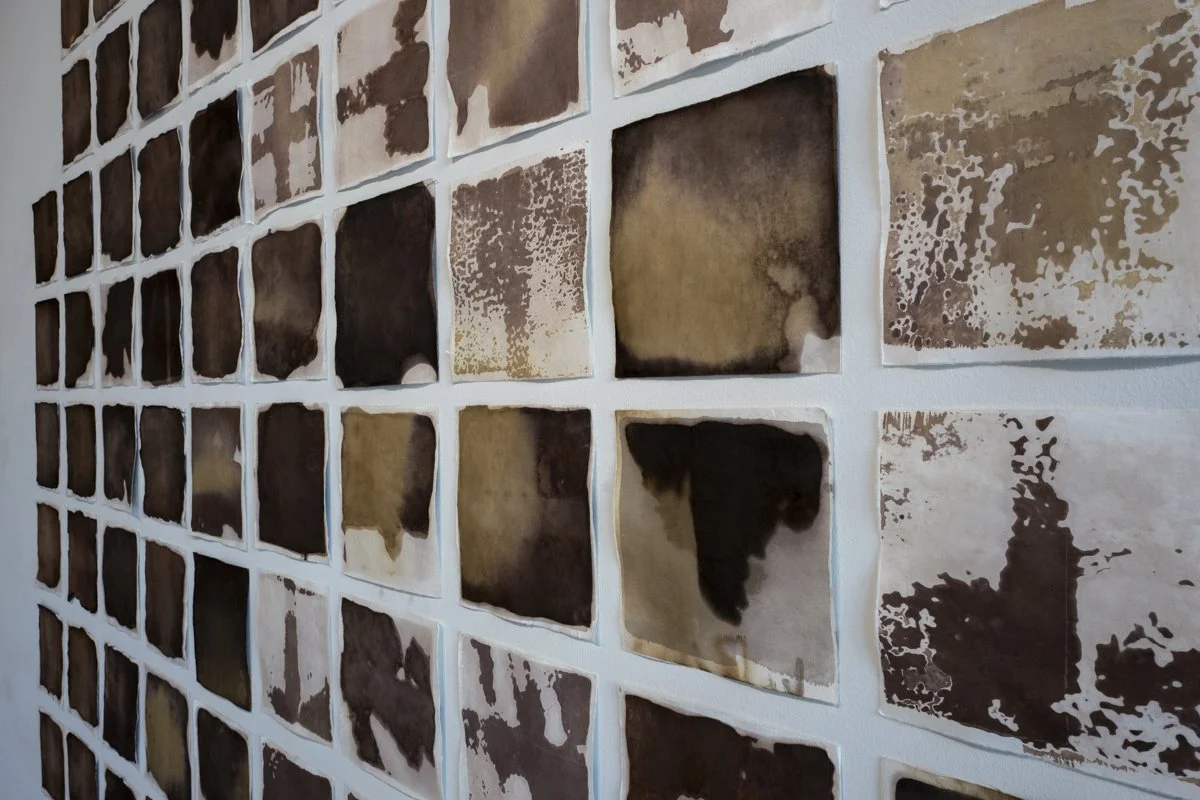
108 Days (detail)
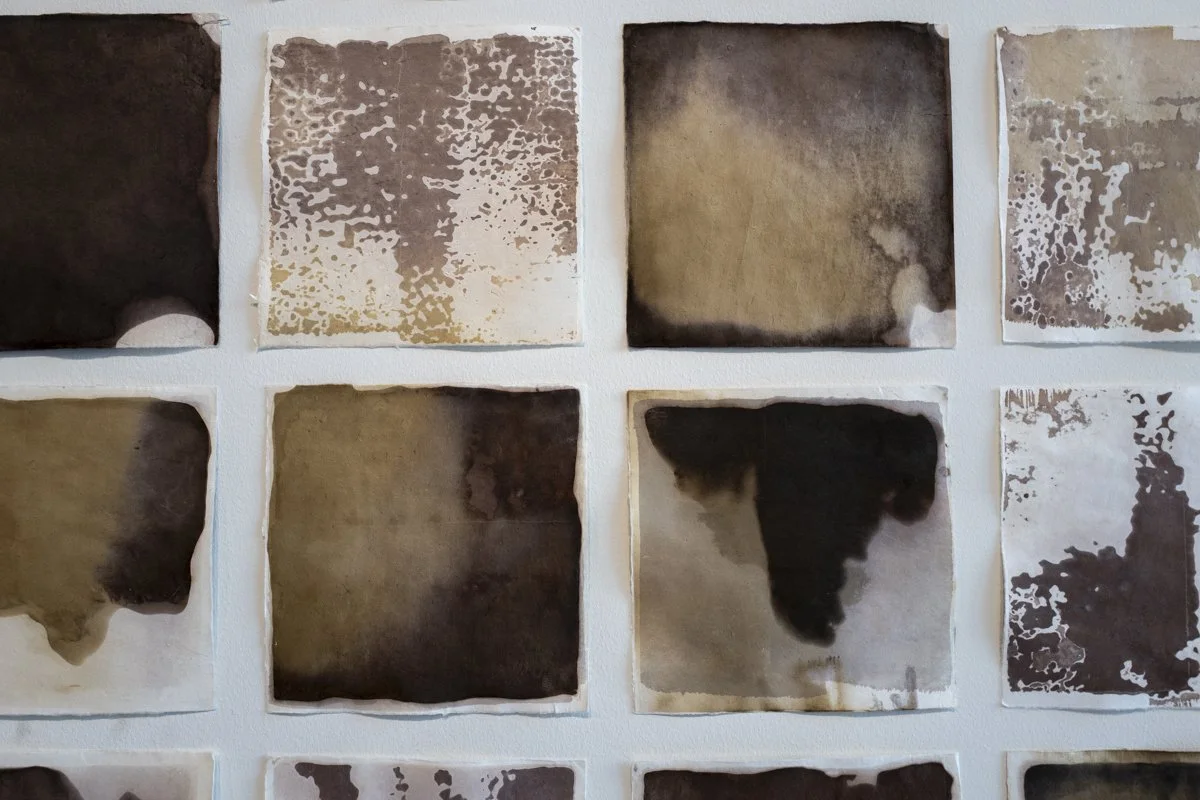
108 Days (detail)
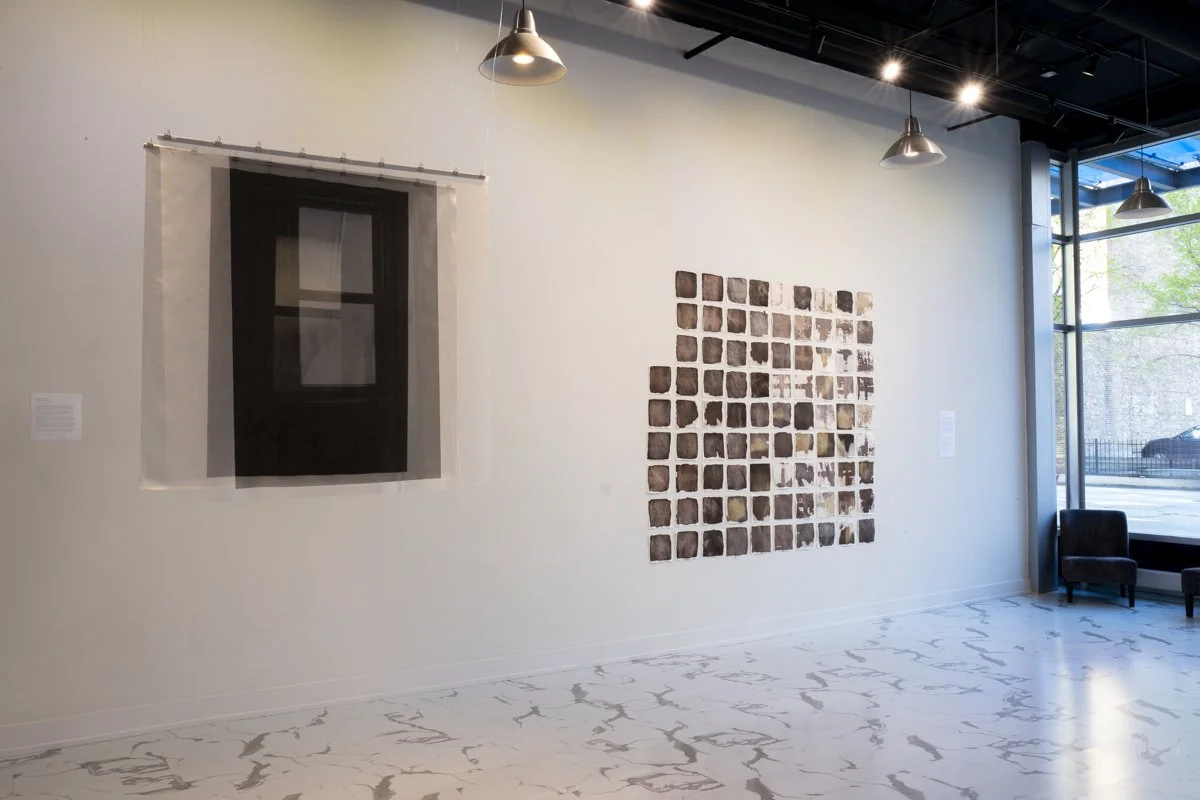
A Year in Light and 108 Days (2026) Installation View